Posts

Showing posts with the label WordsOnPlays

Barrier Breakers in Sports
Image
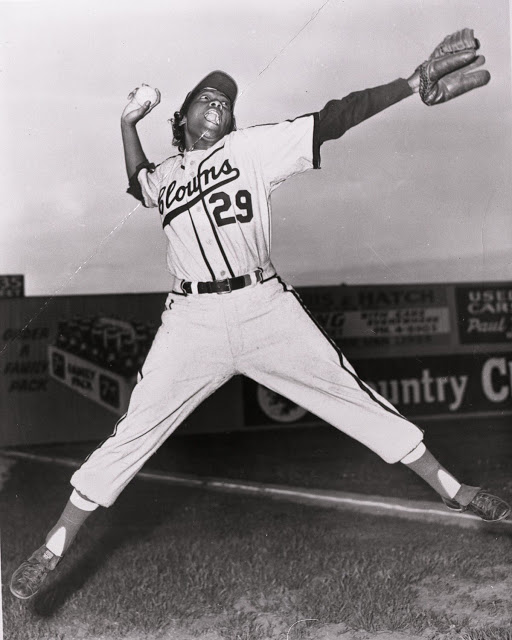
By A.C.T. Publications Staff You still have the opportunity to watch  Toni Stone  from the comfort of your home. Those who have purchased tickets to  Toni Stone  will receive an email with access to the recording. If you missed your chance to purchase tickets, visit  bit.ly/ACTStreaming  to see our video streaming options, available for a limited time. Toni Stone was the first woman to play professional baseball with men. Her contributions to the sports industry were supported by many who broke barriers before her, just as she paved the way for those who came after. Here we note some outstanding athletes whose dedication and perseverance overcame prejudice. Their efforts on and off the field continue to create a fairer and more diverse sporting community. Baseball player Toni Stone, the first woman to play professional baseball in the Negro League. Photo courtesy of the Negro Leagues Baseball Museum. Tidye Pickett Home: Chicago, Illino...

The Negro Leagues: Toni Stone in Historical Context

Image
By A.C.T. Publications Staff Have you ever heard of the New York Black Yankees? What about the Homestead Grays, Baltimore Black Barons, or Cincinnati Tigers? From the 1880s until the 1950s, there were two professional baseball systems in the United States: one for white players, and another for Black Americans. Both contributed to the development of the modern game and baseball industry. This year, 2020, marks the centennial of the Negro Leagues, which was founded by Andrew “Rube” Foster,  retired pitcher and owner of the Chicago American Giants, in February 1920 to “create a profession that would equal the earning capacity of any other profession . . . keep Colored baseball from the control of whites . . . [and] do something concrete for the loyalty of the Race.” The 1943 Homestead Grays lineup included several future Hall of Fame players: Cool Papa Bell (back second from left), Josh Gibson (back fifth from left), and Buck Leonard (back second from right). Photo cou...

Keep the Story Rolling: An Interview with Toni Stone Director Pam MacKinnon

Image
By A.C.T. Publications Staff Before Pam MacKinnon got a call from her friend Samantha Barrie in 2012, she had never heard of Toni Stone. Barrie, a theater producer and avid baseball fan, urged MacKinnon to read a biography published in 2010— Curveball: The Remarkable Story of Toni Stone, the First Woman to Play Professional Baseball in the Negro League . MacKinnon found the book riveting. “It just works on so many different levels,” says the Tony Award winner and A.C.T. artistic director. “Historically, sociologically, and biographically.” Barrie purchased the rights from author Martha Ackmann, and MacKinnon approached playwright Lydia R. Diamond to dramatize the story of Toni Stone. “I had seen a few of Lydia’s plays,” says MacKinnon. “Even though we’d never worked together before, I felt like we shared the same theatrical sensibility. I felt that for this play to get written and produced, Lydia needed to write it. She can write really hard-hitting things that are also filled wit...

Director Eric Ting on Gloria (Part Two)

Image
By Claire L. Wong A champion of new works, Eric Ting has directed such world-premiere productions as Jackie Sibblies Drury’s  We Are Proud to Present a Presentation...  (2012; Obie Award) to Lauren Yee’s  The Great Leap  (2018) and The 1491s’  Between Two Knees  (2019). This passion for new works is evident in Ting’s continued collaboration with his longtime friend and  Gloria  playwright Branden Jacobs-Jenkins. Ting previously directed two works by Jacobs-Jenkins,  Appropriate  (2015), a drama about an American family with contentious secrets, and  An Octoroon  (2017), a Brechtian critique of the portrayal of race in theater. In  Gloria , as in  An Octoroon  and  Appropriate , there are layers to be uncovered in the subject matter of Jacobs-Jenkins’s plays and the bold way that the playwright confronts his audience. “Are these stories trying to shock us or make sense of shock?” asks the director. Ting’...

Director Eric Ting on Gloria (Part One)

Image
By Claire L. Wong  “Think of the Greek gods,” says director Eric Ting. “Stories arise from our need to make sense of our world, to understand trauma and disaster.” Ting has been called a magician by the  New Yorker , and his work “powerfully and ultimately sublime” by  Variety . It’s no wonder he’s received critical respect nationwide, from TBA Awards here in the Bay Area to an Obie Award in New York. We spoke with him about his work on A.C.T.’s production of  Gloria , written by his longtime friend and  Gloria  playwright Branden Jacobs-Jenkins. Movement Coach Danyon Davis, Stage Manager Christina Hogan, Director Eric Ting, Voice and Dialect Coach Lisa Anne Porter, and actor Martha Brigham work on A.C.T.’s 2020 production of Gloria. Photo by Simon Hodgson. What draws you to Branden’s plays? There are these moments where, through the experience of a certain character, you recognize a sense of grace living in the heart of his plays. As much as t...

Playwright Will Eno on Wakey, Wakey

Image
By Joy Meads There is a strange alchemy in Will Eno’s plays that draws us away from the anxious, racing world outside and into a quiet communion with one another and those solid, undeniable realities that connect us. Almost imperceptibly, he makes us more conscious of the world and more connected to those around us. Eno’s play The Realistic Joneses was performed at A.C.T.’s Geary Theater in 2016, and now his work is back at the Geary with  Wakey, Wakey . We are grateful we have the opportunity to share this play with you.  Wakey, Wakey playwright Will Eno. Photo courtesy Will Eno.  What is it about the Geary that makes it the right home for this piece?   The play, I hope, makes spaces for us to have a human connection, to come together as a group of humans and sit with one another in the experience of larger, maybe scary or sad things. I love the potential ramifications of an audience using that entire space. I love the frank connection that Guy has with...

Director Anne Kauffman on Wakey, Wakey

Image
By Hannah Clague “The world is a complicated place,” says Anne Kauffman, “and directing theater is my way of facing that.” In two decades working in the American theater, the New York–based director has been unafraid to tackle weighty subjects. In addition to her work on and off Broadway, the Obie Award–winning Kauffman directed  Hundred Days  at Z Space in 2014, a musical that also tackles universal explorations of humanity. Kauffman returns to A.C.T., where she led an MFA Program production of Steve Gooch’s uncompromising drama  Female Transport  in 2005. What excites you about Wakey, Wakey? Growing up in the theater, we’re all taught the Aristotelian way of looking at plays: there’s a beginning, middle, and end. It’s this beautiful arc and all the moments of the play add up to one thing. Each scene is built to take us one step in the direction of the final conclusion. Real life is not shaped that way, and neither is  Wakey, Wakey . It’s messing wit...

Humor and Vulnerability: Tony Hale on Wakey, Wakey

Image
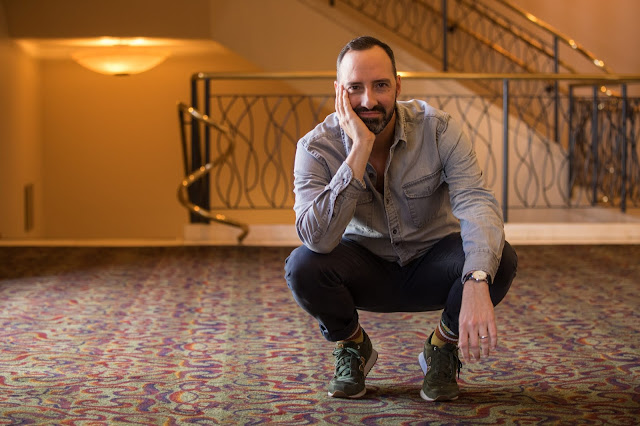
By Simon Hodgson “I hope that Bay Area audiences walk away from Wakey, Wakey feeling encouraged,” says two-time Emmy Award winner Tony Hale. Though Hale is best known for his television work in Veep and Arrested Development and recent big screen outing as the voice of Forky in Toy Story 4 , his theater roots run deep. You’ve been working for 20 years in film and television. How did you get started? I was not a sports kid and my parents didn’t know what to do with me. My dad was in the army and he retired in Tallahassee, Florida, where I moved in the seventh grade. By the grace of God, there was this children’s theater nearby, Young Actors Theater, and my parents signed me up. It’s difficult to put into words how supportive and influential that theater was for me growing up. It was a space to be silly and stupid, to be free to discover, and to find what I love to do. I adore going back and talking with students and raising money for the theater. Whether a kid goes into the arts or no...

The Growth of Women’s Cricket

Image
By Simon Hodgson  When cricket first took root in 18th-century Britain, women’s cricket was a popular activity. “The greatest cricket match that was played in this part of England,” recorded the Reading Mercury newspaper in 1745, was “between eleven maids of Bramley and eleven maids of Hambledon, all dressed in white. . . . The girls bowled, batted, ran and catched [sic] as well as most men could.” In villages throughout the southeast of England, women’s teams—composed largely of middle- and upper-class players— competed in front of mixed crowds.  Cricketer Mithali Raj batting for India against England in Truro, United Kingdom, July 8, 2012. Photo by Harrias. Courtesy Wikimedia Commons. As the 18th century wore on, however, and the Industrial Revolution took hold of towns in the north of England in the 1800s, the game did not spread widely among working-class women. “The time and space requirements of the factory system and an increasingly strict moral attitude am...

Playwright Kate Attwell on Testmatch (Part Two)

Image
By Simon Hodgson As soon as director Pam MacKinnon read the script for a new play titled Testmatch , she fell in love with the writing of its playwright, Kate Attwell. Hear from the playwright and director about the journey from script to stage, and catch the world premiere of Testmatch at A.C.T.’s Strand Theater. Left to right: England 3 (Millie Brooks), England 2 (Arwen Anderson), India 2 (Lipica Shah), India 1 (Meera Rohit Kumbhani), and India 3 (Avanthika Srinivasan) discuss which is the better cricket team in Kate Attwell’s Testmatch .  Photo by Kevin Berne Pam MacKinnon:  There are many extraordinary theatrical elements in  Testmatch : the way actors take on other guises to tell the story in different ways; the oversized British accents; the Memsahib character that echoes Ophelia [in Shakespeare’s  Hamlet ]; the clash of contemporary and classical language; the character of Abhi who goes in and out of the scene as both the beleaguered sepoy a...

Playwright Kate Attwell on Testmatch (Part One)

Image
By Simon Hodgson As soon as director Pam MacKinnon read the script for a new play titled Testmatch , she fell in love with the writing of its playwright, Kate Attwell. Hear from the playwright and director about the journey from script to stage before catching the world premiere of Testmatch at A.C.T.’s Strand Theater. Playwright Kate Attwell. Photo courtesy Kate Attwell.   Pam MacKinnon:  As a South African–born playwright, you might be expected to draw on that experience in your work. What made you choose India as the focal point? Kate Attwell:  What I want to do with this play is challenge the notion of empire and the way it’s historicized. I want to confront the way people talk about empire—to take down the idea that “We British went all over the world, we took so much, we destroyed so much, but now we’re going to talk about it as this wonderful time when we built the railways.” Britain’s colonization of India had a particularly capitalist bent—it was...

Director Tamilla Woodard on Top Girls (Part Two)

Image
By Elspeth Sweatman  A year after bringing the rip-roaring adventure  Men on Boats  to the Strand, Director Tamilla Woodard is back at A.C.T. with Caryl Churchill’s 1982 play  Top Girls . Director Tamilla Woodard (left) and A.C.T. Artistic Director Pam MacKinnon (right) discuss  Top Girls . Photo by Claire L. Wong. What’s your process as a director? Do you like to do research? Any play I do, I go as deep as I can. Of course, I think that’s simply part of the job. The more you dig, the more you find and the more you find, the more you need to keep looking. I want to surround myself with as many tools as I can, not out of studiousness but to communicate about the play. First and foremost, I need to satisfy my questions so I go until I run out of time [ Laughs ] which 99.9 percent of the time is what happens. All of that is fuel for my imagination and decision-making. One of the things that I do with a play is I sit down and write just pages and pages...

Director Tamilla Woodard on Top Girls (Part One)

Image
By Elspeth Sweatman A year after bringing the rip-roaring adventure Men on Boats to the Strand, Director Tamilla Woodard is back at A.C.T. with Caryl Churchill’s 1982 play  Top Girls . Director Tamilla Woodard describes her vision for Top Girls . Photo by Claire L. Wong. Men on Boats , which you directed last fall at the Strand, upended stereotypes, and in a way, Top Girls is doing something similar. These are powerful female characters, but they are all still trapped inside the patriarchy.  They are responding to the invisible presence of men. It’s like there are only women onstage but there’s a big man head hanging above them, looking down at them. [ Laughs ] Jaclyn [Backhaus] tackled stereotypes in Men on Boats by having no men and no mention of the fact that these female-identified bodies were playing men; men disappeared entirely. Here, no men appear onstage but man-ness is ever present. Masculinity is present. Patriarchy is present. These women are under t...

Join the Crash, Embrace the Herd

Image
By Elspeth Sweatman A crowd. Photo courtesy Pxhere.   Like it or not, humans are herd animals. From the moment we are born, we crave interaction, communication, affection. To achieve these needs, we accept rules and traditions that help us to fit in, get along, and stay safe. Yet, we also know how dangerous going along with the group can be. Our news reels and Netflix queues are full of examples of innocent bystanders being duped, injured, or killed because they followed others. How can herd mentality be both the bedrock of our civilization and its undoing? There are two types of herding: self-interested (when we copy the motivations and actions of others for our own gain) and collective (when we imitate others for the advantage of the entire group). When we go to a Giants baseball game at Oracle Park and follow the crowd to the entrance, that’s self-interested herding; we assume people know where they are going. When we stand on the right-hand side of escalators to let ot...

Sports or Theater?

Image
By Simon Hodgson  In a room deep below the bustling crowd, performers prepare for a great entertainment spectacle. They put masks over their heads, they cover their bodies with brightly colored outfits, they rub greasepaint on their faces. As they step out into the arena, the crowd roars. Is this a grand drama on the stage of The Geary, or the Super Bowl? Manford (Tim Liu, right ) gives his pitch to Coach Saul (Arye Gross, left ) in A.C.T.'s production of The Great Leap . Photo by Kevin Berne. The idea of performance—sporting or theatrical—is full of crossover, and costume is just one shared element. While we are used to seeing actors transfigure to create three-dimensional characters onstage, the same transformation takes place in the world of sports. Think of football players, layering their bodies with helmets, shoulder pads, gloves, and mouthguards, or ice hockey goaltenders donning wire-mesh faceguards and throat protectors. These “costumes” are just as essential as...