Posts

Showing posts with the label NirmalaNataraj

The Enduring Mystique of Caryl Churchill
Image
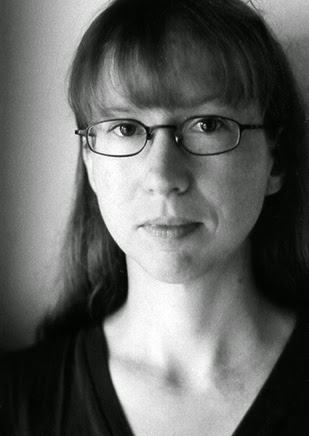
The Enduring Mystique of Caryl Churchill By Nirmala Nataraj Caryl Churchill. Photo by Stephen Cummiskey. Caryl Churchill is perhaps the most acclaimed female playwright in the English-speaking world, and simultaneously the most elusive. Critic Charles Spencer has called her the “least predictable of contemporary playwrights.” Her work has been described as elliptical, provocative, shocking, confounding—and, over the years, it has become significantly more pared down, devoid of stage directions or notes, which only seems to contribute to her enduring mystique. Although Churchill has been writing plays for over five decades, she stopped giving interviews many years ago. She rarely comments on critics’ analyses of her work, but her past interviews and the words of her close collaborators, of whom there are many, continue to spark the imaginations of those who recognize the multiple ways in which she has pushed dramatic boundaries over the course of her career. Feminist and...

An Enchanting Vision: The Creation of A Little Night Music

Image
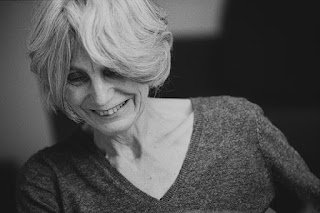
An Enchanting Vision: The Creation of A Little Night Music By Nirmala Nataraj Stephen Sondheim. Photo by Jerry Jackson. Inspired by Smiles of a Summer Night , filmmaker Ingmar Bergman’s romantic comedy of errors, A Little Night Music emerged from Stephen Sondheim’s vision of a musicalized tale about the games that men and women play in sex and love. With a grand scope that is meant to generate nostalgia for turn-of-the-twentieth-century elegance, the play is a marked departure from Sondheim’s previous collaborations with director Harold Prince, such as Company (1970) and Follies (1971), which feature upper-class New Yorkers in a contemporary setting. Before librettist Hugh Wheeler came on board, Prince and Sondheim had been toying with the idea of writing a chamber opera since their collaboration on the 1957 musical West Side Story (for which Sondheim was the lyricist and Prince the producer). Scandinavia in midsummer (a time of year during which the sun rarely sets th...

The West Indian Front Room

Image
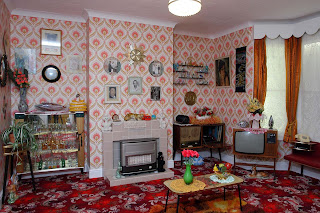
The West Indian Front Room The Visual Inspiration behind Let There Be Love By Nirmala Nataraj The West Indian Front Room exhibition at the Geffrye Museum, 2005-2006 Photo by John Neligan In 2005 Kwame Kwei-Armah was moved to write Let There Be Love after seeing an art exhibition at London’s Geffrye Museum of the Home. The show, entitled The West Indian Front Room: Memories and Impressions of Black British Homes , recreated the front rooms of African-Caribbean immigrants of the 1960s and ’70s, while providing stories from the first wave of West Indian immigrants to England. The vivid installations, awash in a sensorial landscape of sounds and sights, struck Kwei-Armah profoundly, and from his memories of the “politics of my family’s front room,” the story of Alfred, Gemma, and Maria emerged. The exhibition’s curator, Michael McMillan, describes the quintessential front room, which is derived from the Victorian parlor: “colorful floral-patterned wallpaper and carpet tha...

Survival of the Fittest Stories: An Interview with Playwright Anne Washburn

Image
Survival of the Fittest Stories An Interview with Playwright Anne Washburn By Nirmala Nataraj Anne Washburn. Photo by Madeleine George. Anne Washburn remembers her formative years as a Bay Area theater artist—in fact, one of her early creative homes was A.C.T.’s Young Conservatory program. “The culminating exercise was to imagine that a great plague had taken hold of the world, and the YC participants were all doctors who had to envision what they would do in the face of disaster,” says Washburn. “It seems appropriate that I’m coming full circle to do an apocalyptic play at A.C.T.”    “Since all stories, no matter how fanciful, are in some way constructed from our experiences, real or imagined, all storytelling is a remaking of our past in order to create our future,” Washburn has written. Mr. Burns has accordingly been lauded as a celebration of the human instinct to tell stories—and a reminder of how deeply this instinct is tied to our endurance as a species....